


Facial Recognition and Biometric Privacy
How facial recognition works, where you meet it, what NIST found on accuracy and bias, and the rules and settings that protect your face.
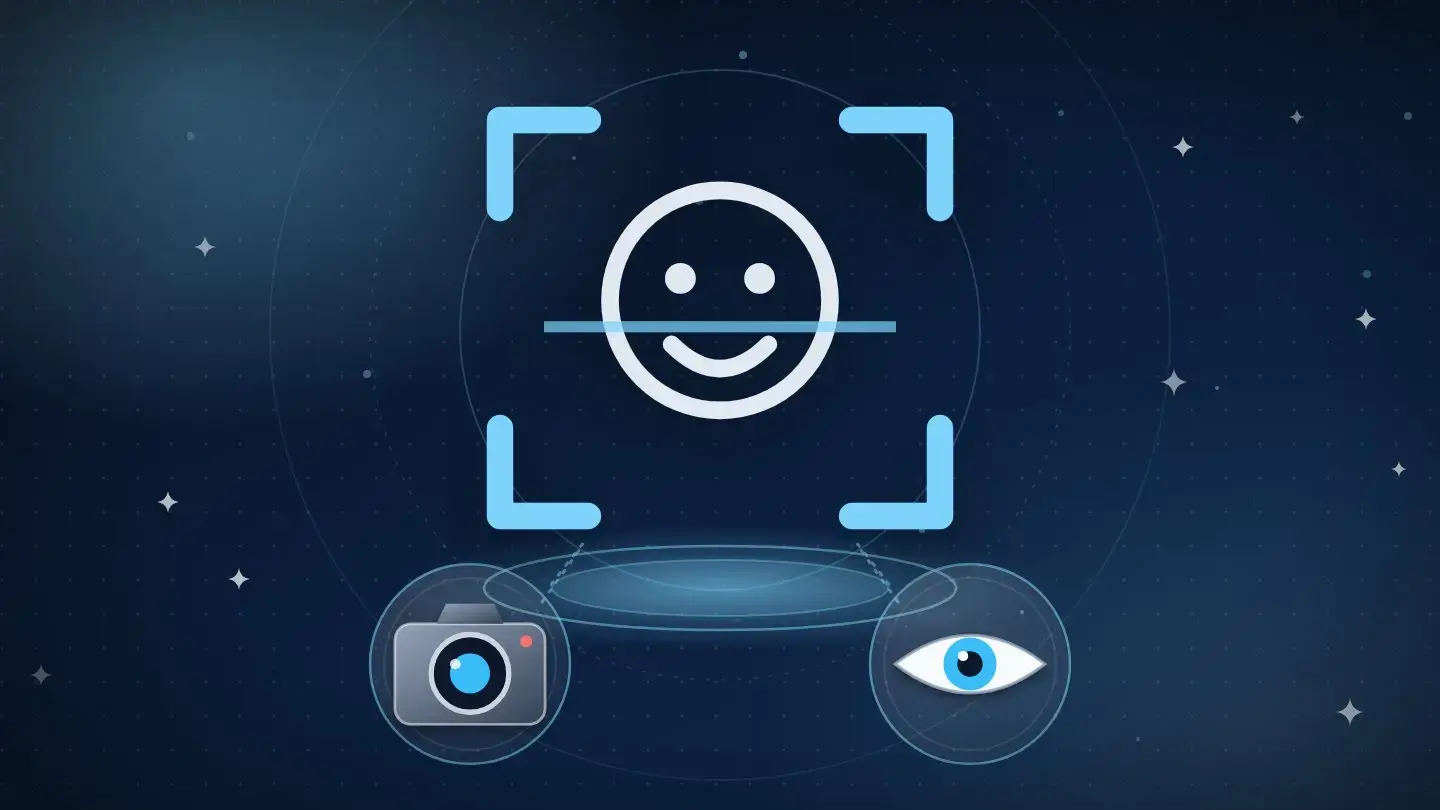
Facial recognition software compares a face in an image with stored faces and reports whether they match.
It can unlock your phone, check a passport, or search a database for a person of interest. The privacy risk depends on which of those jobs it is doing.
This guide explains how it works, where you meet it, what the US National Institute of Standards and Technology found about accuracy and bias, which rules apply, and what you can change. Sources were checked on October 21, 2026.
The short answer
Facial recognition does two different jobs. One-to-one matching checks whether two photos show the same person. One-to-many matching searches a whole database for a match, and it is the kind used to identify people.
You control the first kind when you use it on your own phone. You control much less of the second kind, so the main protections are laws, opt-outs where they exist, and knowing which cameras use it.
Good to know
Rules differ by country and state. Illinois, the European Union and the FTC each treat it differently, and the sections below say what each one actually requires.
How facial recognition works
NIST describes the two tasks in its evaluation of face recognition software. The first is verification, such as unlocking a smartphone or checking a passport, where a photo is compared with one stored photo of the claimed person.
The second is identification: does the person in a photo appear anywhere in a database?
NIST measures two kinds of error. A false positive means the software wrongly treats photos of two different people as the same person. A false negative means it fails to match two photos that do show the same person.
Where you meet it
Your phone
Apple puts the odds of a random stranger unlocking an iPhone with Face ID below 1 in 1,000,000 when one appearance is enrolled. After five unsuccessful matches, the phone requires the passcode.
Airports
The TSA says its facial identification participation is optional, and that a passenger who has consented can opt out at any time and use standard identity verification by an officer instead.
Home cameras
Google's familiar face detection needs a Google Home Premium subscription and is not available for cameras based in Illinois. Google tells users to check local privacy laws and get permission before saving a person's face data.
Stores
The FTC's 2023 case against Rite Aid concerned facial recognition used in retail stores.
Face ID on your iPhone
Apple says Face ID converts a depth map and infrared image of your face into a mathematical representation, using part of the neural engine inside the Secure Enclave, and compares that with the face you enrolled.
Face ID adapts to changes in your appearance, such as makeup or growing facial hair.
Apple says the probability of a false match is higher for twins and some other cases. If that matters to you, use a passcode. Our guide to iPhone privacy settings to change covers Face ID and Stolen Device Protection.
Accuracy and bias: what NIST found
NIST evaluated 189 software algorithms from 99 developers, which it describes as a majority of the industry. It found that the answer depends on the algorithm, the application and the data, but the majority of algorithms show demographic differentials.
A differential means the algorithm matches photos of the same person less reliably for some groups than for others.
For one-to-one matching, NIST saw higher false positive rates for Asian and African American faces than for Caucasian faces, often by a factor of 10 to 100 depending on the algorithm.
Higher false positives matter for two reasons. In access control, they can let an impostor in. In identification, they can point police or a shop at the wrong person. The study dates from 2019, so newer algorithms may differ.
How to read an accuracy claim
A single accuracy figure hides which error it measures. A false positive rate and a false negative rate answer different questions, and the same system can look excellent on one and poor on the other.
Ask which task was tested, one-to-one or one-to-many, on what images, and for which groups. NIST's finding that results vary by algorithm and by group is the reason a headline number is not enough.
Here is an illustration, not a measurement. If a system's false positive rate were 1 in 100,000 and a group's rate were ten times higher, that group's rate would be 1 in 10,000.
Scanned across a crowd, the same difference produces many more wrong matches.
What the law says
Facial recognition is regulated unevenly, and most of the rules come from three places.
Illinois
The Biometric Information Privacy Act covers scans of hand or face geometry. It requires informed written consent before collection and a public written retention policy.
Illinois penalties
Biometrics must be destroyed when the purpose is met or within three years of your last interaction. Damages are $1,000 for negligent violations and $5,000 for intentional or reckless ones.
European Union
The AI Act bans AI systems that build or enlarge facial recognition databases by scraping faces indiscriminately from the internet or CCTV footage. It also restricts real-time remote biometric identification in public spaces by law enforcement.
United States, federal
The FTC enforces against unfair or deceptive practices. In December 2023 it banned Rite Aid from using facial recognition for surveillance purposes for five years.
The FTC alleged that Rite Aid failed to test the accuracy of its system, did not tell customers it was in use, and deployed it in ways that disproportionately affected people of color.
Rite Aid disagreed with the allegations and said the technology was a limited pilot.
The order also stops Rite Aid from using the technology if it cannot control potential risks to consumers, news reports on the settlement said. The FTC's announcement described the practice as reckless.
Illinois lawmakers have amended the Act over time, so check the current text on the Illinois General Assembly's site before relying on a figure.
Face search and facial recognition software
Face search tools use one-to-many matching: they compare one photo with a large set of stored images. The accuracy figures above come from controlled tests of software, not from any particular search tool or app.
If a service offers to find your face online, read its privacy policy first. Ask what it stores about the photo you upload and for how long.
Blocking glasses and other countermeasures
Eyewear and patterned clothing sold to defeat facial recognition exist. NIST tests software on images, not eyewear, and I did not find an official test of any consumer product. This guide therefore makes no claim that any pair works.
Our advice: treat any claim about blocking recognition as unproven until an independent test supports it.
What you can do
This section is our advice, built on the sources above.
Keep your passcode strong
A passcode is the fallback for Face ID, and Apple's five-attempt limit applies to the face match only.
Use opt-outs
At airports, ask for the standard check. At home, decide whether a camera needs face recognition at all.
Delete saved faces
Google lets you rename or delete a face profile in the app.
Know your state
If you live in Illinois, the Biometric Information Privacy Act gives you rights that other states may not.
Ask before you scan
Any business using face scans should tell you what it keeps and for how long.
Related guides
Biometrics versus passwords
This section is our analysis. A password can be changed after a leak, and a face cannot. That is why biometric rules focus on consent, retention and destruction, and why the Illinois law requires a written retention policy.
On a phone, the biometric is usually only a convenience layer. Apple says a passcode is required after five unsuccessful match attempts, so a strong passcode still protects the device.
Questions to ask a business that scans faces
Do you store my face or only a mathematical template? How long do you keep it? Who can access it? Do you share it with other companies? Can I opt out and still use the service?
Under Illinois law, a private entity must have a public written retention schedule and obtain written consent first. In other places, the answer may depend on the company's own policy, so asking is worth it.
Facial recognition is one part of a wider picture of tracking. Our explainers on how online tracking works and on government surveillance cover the other parts.
If you are weighing cameras for your home, see our guide to smart home privacy.
Frequently asked questions
What is facial recognition used for?
Unlocking devices, checking identity at borders and airports, searching databases for people of interest, and sorting photos. NIST groups these into one-to-one matching and one-to-many matching.
Is facial recognition legal?
It depends on where you are and who is using it. Illinois requires written consent from private entities, the EU AI Act bans some uses outright, and the FTC can act against unfair practices.
Does Face ID send my face to Apple?
Apple says the matching happens in the Secure Enclave on the device. Read Apple's own page for the full detail.
Is facial recognition accurate?
It depends on the algorithm. NIST found large differences between developers, and higher false positives for some groups in one-to-one matching.
Can I opt out at the airport?
The TSA says participation in its facial identification program is optional, and you can use the standard process instead.
A quick checklist
Sources
- NIST: Study evaluates effects of race, age, sex on face recognition software
- Apple Support: About Face ID advanced technology
- TSA: Evaluating facial identification technology
- Google Nest Help: Learn about familiar face detection
- FTC: Rite Aid banned from using AI facial recognition
- Illinois General Assembly: Biometric Information Privacy Act (740 ILCS 14)
- EUR-Lex: Regulation (EU) 2024/1689, Artificial Intelligence Act
From circuittimes.com/security/facial-recognition/
Was this guide helpful?
What went wrong?
 Read nextExplainer 11 min readPhishing Explained: Types, Examples and How to Spot ItWhat phishing is, the main types, examples from the FTC, how to spot a phishing email or text, what to do if you clicked and where to report it.
 How-to 7 min readAndroid Privacy Settings to Change Today
 How-to 10 min readWhat to Do After Identity Theft
 How-to 8 min readiPhone Privacy Settings to Change Today
The briefing, without the noise.
The stories that matter in technology, every weekday morning.
Free. Unsubscribe in one click.